Written by the team at KCs Plumbing, Heating & Drain Services · Reviewed by Jack Japuncic, Master Plumber
If you've spotted a small tank mounted near your water heater and wondered what it's for, or you've been told during a quote that your home needs one and you're not sure why, this is the explanation. A water heater expansion tank is a small, inexpensive component doing an important job, and in a growing number of homes here it's no longer optional. Understanding it is what tells you a reputable installer is doing their job properly, not upselling you.
The Physics: Why Heated Water Needs Somewhere to Go
Water expands when it's heated. In an open plumbing system, that extra volume simply pushes back into the municipal supply, no problem. But many modern homes run a "closed" system, usually because of a backflow preventer or a pressure-reducing valve on the main line, and in a closed system that expanding water has nowhere to go. Pressure builds inside your pipes and tank every single time the water heats. A
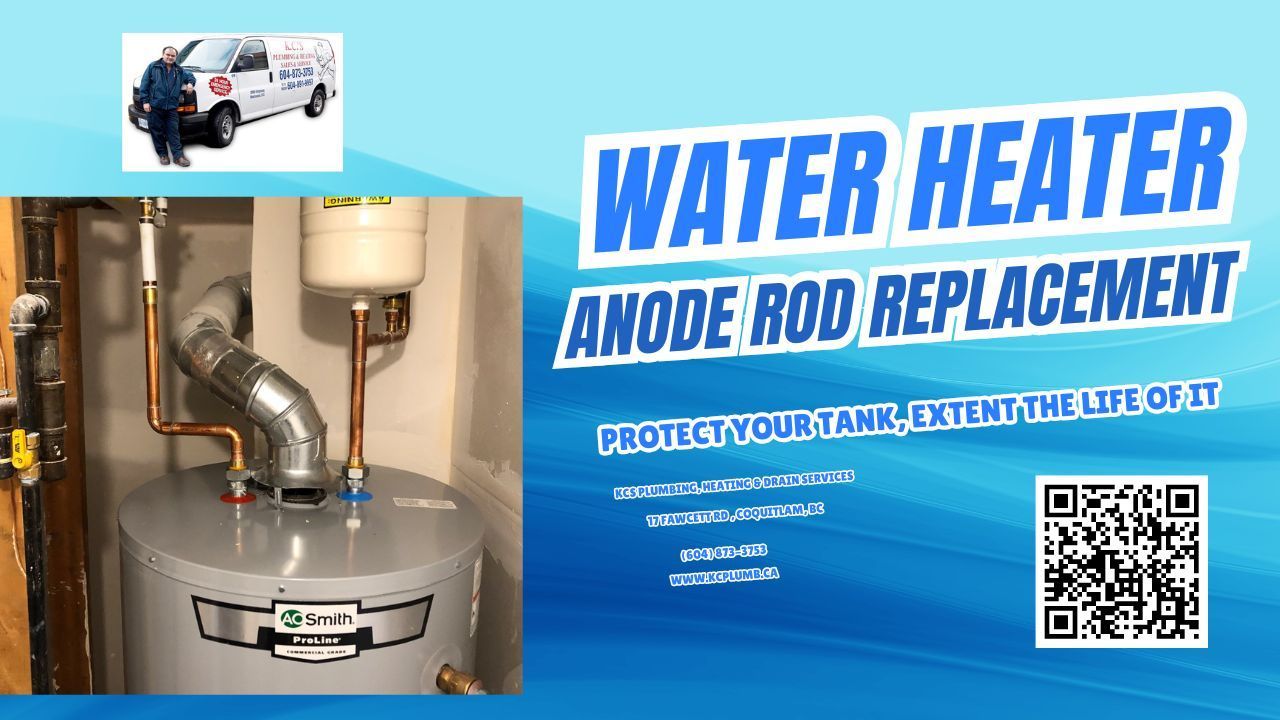
thermal expansion tank exists to give that pressure somewhere to go: a small tank with an air cushion that absorbs the expansion, protecting your plumbing, your water heater, and every fitting downstream.
Why This Is Coming Up More Than It Used To
Backflow preventers and pressure-reducing valves have become standard on local water services over the years, which means more homes have quietly become closed systems without the owner ever being told. The moment a system closes,
thermal expansion stops being harmless and starts stressing the weakest points in the plumbing. That's the entire reason this part has gone from "sometimes needed" to a standard line item on a correct installation.
Signs of a Failed or Missing Expansion Tank
- The temperature and pressure relief valve drips or discharges. This safety valve releasing water is a classic sign of excess pressure in a closed system.
- Banging or knocking pipes. Pressure spikes can show up as noise.
- Fluctuating or uncomfortably high water pressure. Especially noticeable after the water heater has been running.
- Stress on fixtures and fittings. Repeated pressure cycling shortens the life of valves, faucets, and the water heater itself.
An expansion tank can also simply wear out over time as its internal air cushion loses charge, which is why an existing one is worth checking during
service rather than assumed to be fine forever.
Is It Actually Required, or Just Recommended?
On a closed system, controlling thermal expansion isn't a preference, it's a plumbing code requirement. That's one reason a proper water heater swap is more involved than dropping in a new unit, when we quote a
water heater replacement, checking whether your system is closed and whether an expansion tank is needed is part of doing the job right, not an upsell tacked on afterward.
Getting It Installed Correctly
Installing or replacing an expansion tank is routine work for a licensed plumber, but "routine" doesn't mean "one size fits all" — it has to be correctly sized for your system and properly pre-charged to match your home's water pressure, or it won't do its job. We install quality expansion tanks, including
Amtrol, sized and charged to your specific pressure rather than installed off the shelf.
Frequently Asked Questions
Does My Home Need an Expansion Tank?
If your home has a closed system, often due to a backflow preventer or pressure-reducing valve, then yes, controlling thermal expansion is a code requirement, not optional. An assessment confirms whether your system is closed.
What Are the Signs of a Failed Expansion Tank?
A dripping temperature and pressure relief valve, banging pipes, fluctuating or high water pressure, and extra stress on fixtures are common signs of a failed or missing one.
Can an Expansion Tank Be Added to an Existing Water Heater?
Yes, as a standalone job or as part of a replacement. Correct sizing and pre-charge to your home's pressure are what actually make it effective.
A quick assessment settles whether your system is closed and whether you need one, call (604) 873-3753 or
request service online and we'll check it plainly, install one if it's genuinely needed, and say so if it isn't.
KCs Plumbing & Heating · 17 Fawcett Rd #115, Coquitlam, BC V3K 6V2 · (604) 873-3753 ·
kcplumb.ca